


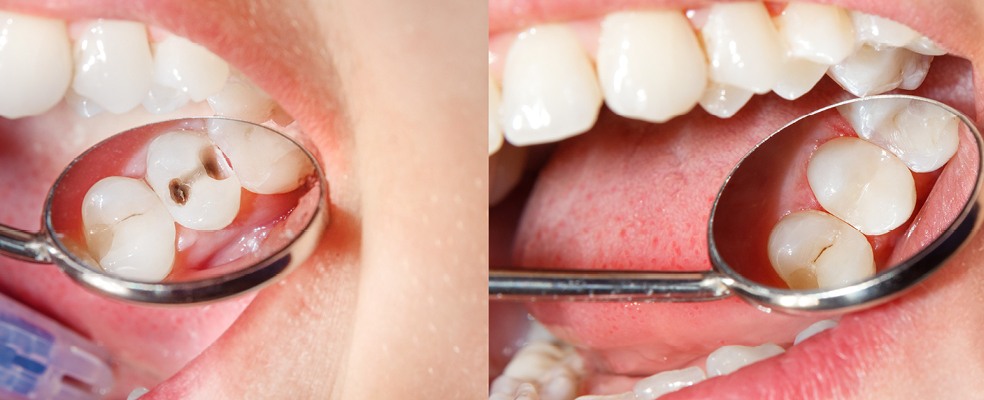
A small cavity is the best possible time to deal with tooth decay — it usually means a quick, simple filling and no bigger problems down the road. The catch is that small cavities often cause no pain, so many are found on an exam or X-ray rather than by the person who has one.
Here's how to recognize a small cavity, whether it can reverse, and what treating one actually involves.
How to spot a small cavity
Early decay can show up as a chalky white spot, a small brown or dark stain, or a tiny rough pit — often on the chewing surface or between teeth where it's hard to see. You might notice mild sensitivity to sweet, hot, or cold, or nothing at all. Because the earliest cavities are silent and often hidden between teeth, X-rays are frequently what catch them first.
Can a small cavity reverse?
There's an important distinction here. The very first stage — a white-spot lesion, where enamel is starting to lose minerals but hasn't broken down — can sometimes be re-hardened with fluoride and better home care before it becomes a hole. But once decay has actually broken through the enamel into a cavity, it can't heal on its own and needs a filling. Catching it in that early window is the whole advantage of regular checkups.
Why treating it early matters
Decay doesn't stop on its own — it works inward toward the softer layers and the nerve. A small cavity treated now means a small filling. The same cavity ignored for a year or two can grow into a large filling, a crown, or a root canal, costing more time and money. Small and early is always the cheaper, easier path.
What treatment involves
Fixing a small cavity is one of the most routine things a dentist does. The decayed area is cleaned out and the space is sealed with a tooth-colored filling that blends in. For very shallow cavities it can be quick and sometimes needs little or no numbing; when anesthetic is used, mild sensitivity for a day or two afterward is normal.
Preventing the next one
Brush twice a day with fluoride toothpaste, clean between your teeth daily, ease up on frequent sugary and acidic snacks, and keep up regular checkups and cleanings. Sealants and fluoride treatments add extra protection, especially for teeth prone to decay.
Frequently asked questions
What does a small cavity look like?
Early cavities can be hard to spot yourself. They may appear as a white, chalky spot, a small brown or dark stain, or a tiny pit on the tooth. Many small cavities cause no symptoms at all and are found on an exam or X-ray before you'd ever notice them.
Can a small cavity heal on its own?
A cavity that has broken through the enamel can't heal itself — it needs treatment. The earliest stage, a white-spot lesion where enamel is just beginning to soften, can sometimes be re-strengthened with fluoride and good home care before it becomes a true cavity. That window is exactly why early checkups matter.
Does a small cavity need a filling?
Usually, yes. Once decay has created a cavity in the enamel, a small filling is the standard fix and stops it from spreading. Treating it while it's small keeps the filling small — waiting often turns a simple filling into a larger one, a crown, or a root canal.
Does filling a small cavity hurt?
A small filling is typically quick and comfortable, often done with little or no anesthetic for very shallow cavities. If numbing is used, the tooth may feel slightly sensitive for a day or two afterward, which settles on its own.
Catch cavities while they're small
The easiest cavity to treat is the one found early. New guests can start with a $39 new-guest exam and X-rays (regularly $289) that checks for decay you can't see yet. Find your nearest Ideal Dental to book a visit.