


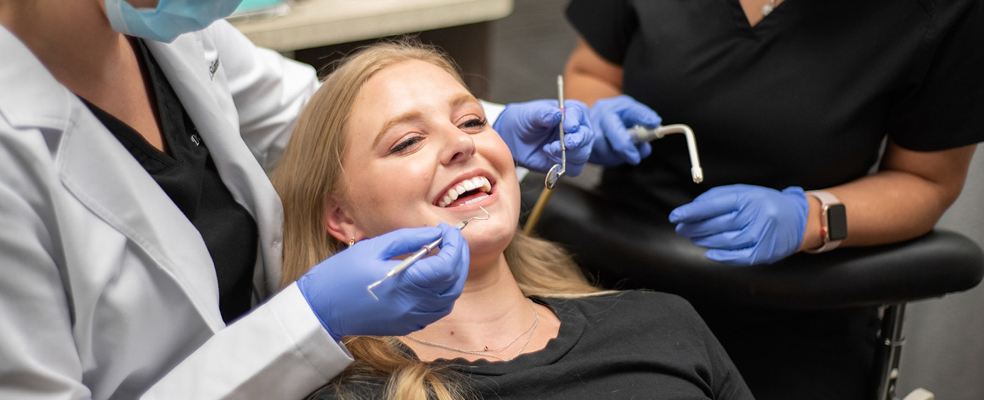
A dental deep cleaning (clinically called scaling and root planing) removes hardened plaque from below the gum line and smooths the tooth root so the gum can reattach. It's not an upgraded version of a regular cleaning. It's a treatment for a diagnosed condition, recommended when gum pockets have deepened past the point a routine cleaning can reach.
October is National Dental Hygiene Month, which makes it a reasonable time to answer the question guests ask most often when a deep cleaning gets recommended: do I actually need this, or am I being sold something? Here is how the decision is made, what the treatment involves, what it costs, and how to tell the difference.
What is a deep cleaning for teeth?
A deep cleaning is a two-part procedure that cleans the surfaces of your teeth below the gum line, where a toothbrush and a routine cleaning cannot reach.
A routine cleaning, by contrast, is a preventive service that polishes the crown of the tooth and cleans just at or slightly below the gum line. Both are done by a hygienist. Only one of them is treatment for disease.
How do I know if I really need a deep cleaning?
The recommendation should be based on measurements and images, not on impressions. A hygienist uses a small probe to measure the depth of the pocket around each tooth in millimeters, and those numbers get charted.
Pocket depths alone are not the whole picture. Bleeding on probing, recession, bone levels, and your history all factor in. But if a deep cleaning has been recommended and nobody has shown you pocket numbers and X-rays, ask for them. A dentist who is confident in the diagnosis will be glad to walk you through it. Our explanation of the role of scaling and root planing goes deeper on where it fits in gum treatment.
If the plan still feels bigger than the problem, get a second opinion. That is a normal part of healthcare, and Ideal Dental offers a complimentary second opinion: a clinical review of a treatment plan from another office.
Why a regular cleaning is not enough once pockets deepen
Once tartar forms below the gum line, no amount of brushing, flossing, or rinsing will remove it. Tartar is mineralized plaque; it is hard, it is bonded to the tooth, and it holds bacteria against the root surface around the clock. The gum responds with chronic inflammation, the pocket deepens, and the deeper pocket collects more bacteria.
Left alone, that cycle progresses from gingivitis (which is reversible) to periodontitis, which involves loss of the bone that holds the tooth in place. Bone loss does not grow back on its own. This is the honest reason the timing of treatment matters so much. Our guide to what gum disease can and cannot reverse covers this in detail.
Gum disease has also been widely studied alongside conditions including heart disease and diabetes. The research describes an association between the two, but the picture is still developing.
Does a deep cleaning hurt?
The procedure itself should not hurt, because the area is numbed before treatment begins. This is the most common worry guests raise, so let's address it:
If dental anxiety is the real barrier, say so when you book. Sedation options exist and we're here to support you through the procedure.
How long does a deep cleaning take?
Most deep cleanings are split into two visits of about one to two hours each, treating half the mouth at a time. Splitting the appointment means only one side of your mouth is numb when you leave, which makes eating and talking easier that day. Mild cases are sometimes completed in one longer visit.
Afterward, you move to a periodontal maintenance schedule, usually cleanings every three to four months instead of every six, for as long as the pockets need monitoring. That ongoing schedule is the part that determines whether the treatment holds.
How much does a deep cleaning cost?
Scaling and root planing is priced per quadrant, and commonly runs between roughly $150 and $400 per quadrant without insurance, meaning a full-mouth deep cleaning often lands between about $600 and $1,600. The range depends on how severe the disease is, how much tartar is present below the gum line, whether local antibiotics are placed in the pockets, and regional pricing.
Most dental plans cover scaling and root planing at a meaningful percentage (often 50% to 80%) because it is classified as a basic or periodontal service rather than a cosmetic one. Coverage typically requires the pocket charting and X-rays that justify the diagnosis, which is another reason to ask to see them. Check your specific plan for your percentage, your deductible, and how much of your annual maximum is still available.
Two timing details are worth knowing if treatment is recommended in the fall. Most plan years reset January 1 and unused annual maximum does not carry over. And FSA funds are typically forfeited on December 31 unless your employer offers a grace period, while HSA funds never expire and can be used whenever you need them.
What happens if I skip it?
Untreated periodontitis is the leading cause of tooth loss in adults. The progression is slow and usually painless, which is precisely what makes it easy to postpone. Pockets deepen, bone recedes, teeth loosen, and the treatment required grows from a hygiene appointment into periodontal surgery, extractions, or tooth replacement.
Declining treatment is your call. Declining it without knowing your pocket numbers is the part worth avoiding.
The bottom line
A deep cleaning is a real treatment for a real, measurable condition — and the way to be confident in the recommendation is to look at the measurements. Ask for your pocket depths, ask to see your X-rays, ask what changed since your last visit, and get a second opinion if anything feels off. If the numbers show pockets of 4 mm or deeper with bleeding, scaling and root planing is the standard of care, and treating it early is both easier and more cost-effective than treating what comes after it.
Schedule an exam and cleaning at an Ideal Dental near you and we will chart your pocket depths and show you exactly where you stand.
Frequently asked questions
What is a deep cleaning for teeth?
A deep cleaning, clinically called scaling and root planing, removes plaque and tartar from below the gum line and smooths the tooth root so the gum can reattach. It treats gum disease, while a regular cleaning is a preventive service done above and just below the gum line.
Is a deep cleaning teeth procedure really necessary?
It is indicated when gum pockets measure 4 mm or deeper, especially with bleeding, tartar below the gum line, or bone loss on X-rays. Ask to see your pocket measurements and X-rays. If the recommendation still seems unclear, a second opinion is a reasonable next step.
Does deep cleaning teeth hurt?
The area is numbed with local anesthetic, so you should feel pressure rather than pain during the procedure. Tenderness and temperature sensitivity for several days afterward are common and usually managed with over-the-counter pain relievers and sensitivity toothpaste.
How much does a deep cleaning cost?
Scaling and root planing is billed per quadrant and commonly runs roughly $150 to $400 per quadrant without insurance, so a full mouth often totals about $600 to $1,600. Most dental plans cover a significant share because it is classified as a periodontal rather than cosmetic service.
How long does a deep cleaning take?
Most deep cleanings are split into two appointments of about one to two hours each, treating half the mouth per visit. Milder cases are sometimes completed in a single longer appointment.
How often do I need a deep cleaning?
Scaling and root planing is usually done once for a given area. Afterward you move to periodontal maintenance cleanings, typically every three to four months, to keep the pockets from deepening again.
Can I just brush and floss better instead?
Improved home care prevents new plaque but cannot remove tartar that has already hardened below the gum line. Once tartar is present under the gums, it has to be removed professionally.