


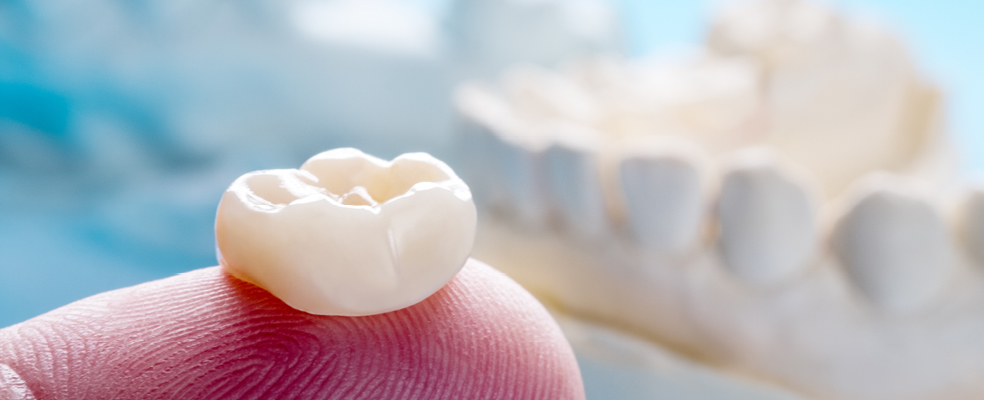
A dental crown typically costs between about $1,000 and $1,500 without insurance, and most guests with dental coverage pay a portion of that after their plan pays its share. The range is wide because the price depends on which tooth is being treated, what the crown is made of, whether any other work has to happen first, and what part of the country you live in. Below is a plain explanation of what drives the cost, when a crown is actually the right call, and what to ask before you agree to treatment.
How much does a dental crown cost?
Most single-tooth crowns fall in the $1,000 to $1,500 range for guests paying out of pocket, though the full span runs from roughly $800 to $2,500 depending on the material and the market. A gold crown and a layered porcelain crown on a front tooth are different products with different lab costs, and they are priced differently.
A few things are worth knowing before you compare numbers:
- The quoted crown fee usually covers the crown itself, the preparation of the tooth, and the cementing appointment.
- It usually does not cover work that has to happen first, such as a root canal, a core buildup on a badly broken tooth, or treating decay underneath an old filling.
- Diagnostic imaging is typically billed separately.
This is the single most common reason a crown "costs more than quoted." The crown fee was accurate. The tooth simply needed more than a crown. Ask for a written treatment estimate that lists every procedure code, not just the crown, and you will not be surprised.
What makes the price range so wide
- Material. Zirconia, layered porcelain, porcelain-fused-to-metal, and gold all carry different lab fees. Strength and appearance trade off against each other, and the best choice depends on which tooth it is.
- Which tooth. A molar takes the heaviest chewing forces and is usually built for strength. A front tooth has to match the color, translucency, and shape of the teeth beside it, which takes more lab artistry.
- Condition of the tooth. A tooth with plenty of healthy structure left is a simpler case than one that has fractured down near the gumline.
- Geography. Fees track local cost of doing business, so the same crown is priced differently in a major metro than in a smaller market.
Does dental insurance cover crowns?
Most dental plans do cover crowns, commonly at around half the fee once any deductible and waiting period are satisfied, but coverage varies enough that you should check your specific plan before treatment. Crowns are usually classified as a major restorative service rather than a preventive one, which is why they are covered at a lower percentage than a cleaning.
Three plan details matter more than the coverage percentage:
- Your annual maximum. This is the ceiling on what your plan will pay in a plan year. A crown consumes a large share of a typical annual maximum, so timing matters.
- Whether your plan year has already reset. Many plans run on the calendar year and unused benefits do not roll over into the next one.
- Replacement clauses. Plans often will not pay to replace a crown that is under a certain age, frequently five to eight years.
If you are close to the end of your plan year and you already know you need a crown, that timing is worth a conversation. Some guests are able to begin treatment before their plan year closes and complete the remaining work after it resets, which spreads the cost across two annual maximums instead of one. Whether that works depends entirely on your plan and your clinical situation, so ask before you assume it.
Do I need a crown or a filling?
A filling replaces missing tooth structure, while a crown covers and holds the remaining tooth together, so the honest dividing line is how much healthy tooth is left and whether it can survive chewing on its own. This is the question most guests actually want answered, and it deserves a direct response rather than a sales pitch.
A filling is generally the appropriate choice when:
- The cavity or damage is small to moderate.
- The walls and chewing surface of the tooth are still largely intact.
- There are no cracks running through the tooth.
A crown is generally indicated when:
- So much tooth structure is gone that a filling would have nothing solid to bond to.
- The tooth has a crack, or a cusp has already broken off.
- The tooth has had a root canal and now needs protection from fracture.
- An existing large filling has failed repeatedly, and each repair removes a little more tooth.
There is a real middle ground. Some teeth can be treated with an onlay, which covers the damaged portion without crowning the whole tooth, and that option is worth asking about. If a crown has been recommended and you are unsure why, the right question is simple and fair: "Can you show me on the image what makes this a crown instead of a filling?" A dentist who is confident in the diagnosis will be glad to walk you through it.
Does getting a crown hurt?
The procedure itself should not hurt, because the tooth and surrounding tissue are fully numbed before any work begins. Most guests describe the appointment as tedious rather than painful, similar to having a large filling placed.
What to expect afterward:
- Soreness in the jaw or gum tissue for a day or two is common, and typically manageable with over-the-counter pain relief.
- Some temperature sensitivity is normal while a temporary crown is in place, since a temporary does not seal as completely as the final crown.
- Sharp, lingering, or worsening pain is not expected. It is a reason to call the office, not to wait it out.
How long does a dental crown procedure take?
A traditional crown takes two appointments over roughly two to three weeks, while a same-day crown can often be completed in a single visit of about one to two hours. Both approaches produce a durable result. The difference is how the crown is manufactured.
With the two-visit approach, the tooth is prepared and an impression or digital scan is taken at the first appointment, a temporary crown protects the tooth while an outside lab fabricates the final crown, and the second appointment is a fitting and cementing visit. With same-day technology, the crown is milled on site, which removes the temporary crown stage and the second appointment entirely. Availability of same-day crowns varies by office, and not every tooth is a good candidate, so confirm it when you schedule.
How long do dental crowns last?
A well-cared-for crown commonly lasts 10 to 15 years, and many last considerably longer. What ends a crown's life is rarely the crown itself. It is usually what happens at the margin where the crown meets the tooth, or the tooth underneath.
The habits that most affect longevity:
- Flossing the margin. A crown cannot get a cavity, but the natural tooth right at its edge absolutely can, and that is the most common failure point.
- Managing grinding. Nighttime clenching puts loads on a crown it was not designed for. A night guard is a reasonable investment to protect one.
- Skipping the ice and hard candy. The same forces that crack natural teeth can chip porcelain.
- Keeping regular checkups. A margin that is beginning to leak is straightforward to address early and expensive to address late.
What happens if you wait
A cracked or structurally compromised tooth does not stabilize on its own, and the cost of treatment generally rises as the tooth deteriorates. This is not a scare tactic, it is mechanics. A crack under chewing load propagates. When a crack reaches the nerve, a crown alone is no longer enough and a root canal enters the picture. When a crack reaches below the bone level, the tooth may no longer be restorable at all, and the conversation shifts to extraction and replacement, which costs substantially more than the crown would have.
The absence of pain is not evidence that a tooth is fine. Many cracked teeth are painless for months. If a crown has been recommended, the useful question is not whether to do it but when, and the answer is usually sooner.
The bottom line
Expect a crown to run somewhere between roughly $1,000 and $1,500 without insurance, expect most plans to cover a meaningful share of that, and expect the final number to depend on what the tooth needs beyond the crown itself. Ask for a written estimate with every procedure code listed, ask to see the image that makes a crown the right call, and ask what your plan's annual maximum looks like right now. Those three questions eliminate almost every unpleasant surprise.
If a crown has been recommended and you want a clear estimate and a second look before you commit, find an Ideal Dental office near you and schedule a visit.
Frequently asked questions
How much does a dental crown cost without insurance?
Most single-tooth crowns cost roughly $1,000 to $1,500 for guests paying out of pocket, with the wider range running from about $800 to $2,500 depending on the material chosen, which tooth is being treated, and the local market. Any preliminary work the tooth needs, such as a root canal or a core buildup, is priced separately from the crown itself.
Does dental insurance cover crowns?
Most dental plans cover crowns as a major restorative service, commonly at around 50 percent of the fee after any deductible and waiting period are met. Coverage is limited by your plan's annual maximum, and many plans will not pay to replace a crown that is less than five to eight years old. Check your specific plan for details.
Do I need a crown or a filling?
A filling is generally appropriate when the damage is small to moderate and the tooth's walls and chewing surface are still largely intact. A crown is generally indicated when too little healthy structure remains for a filling to bond to, when the tooth is cracked or has lost a cusp, or when the tooth has had a root canal and needs protection from fracture. An onlay is sometimes an option in between.
Does getting a dental crown hurt?
The procedure should not hurt, because the area is fully numbed before treatment begins. Mild soreness in the jaw or gum tissue for a day or two afterward is common, as is some temperature sensitivity while a temporary crown is in place. Sharp or worsening pain is not expected and should be reported to the office.
How long does a dental crown procedure take?
A traditional crown takes two appointments spread over about two to three weeks, with a temporary crown in place while an outside lab fabricates the final crown. A same-day crown is milled on site and can often be completed in one visit of about one to two hours. Same-day availability varies by office and by tooth.
How long do dental crowns last?
A well-maintained crown commonly lasts 10 to 15 years and often longer. Crowns most often fail because of decay in the natural tooth at the crown's margin rather than because the crown itself wears out, which is why flossing that edge and keeping regular checkups matter more than anything else.
Can a dental crown get a cavity?
The crown itself cannot decay because it is not natural tooth structure. The tooth underneath and the margin where the crown meets the tooth can decay, and that is the most common reason a crown needs to be replaced. Daily flossing at the margin is the single most effective way to prevent it.
What happens if I delay getting a crown?
A cracked or structurally weakened tooth continues to deteriorate under normal chewing forces. As a crack progresses, treatment can escalate from a crown to a crown plus a root canal, and in some cases to extraction and replacement, which costs considerably more. The absence of pain does not mean the tooth is stable, since many cracked teeth are painless for months.