


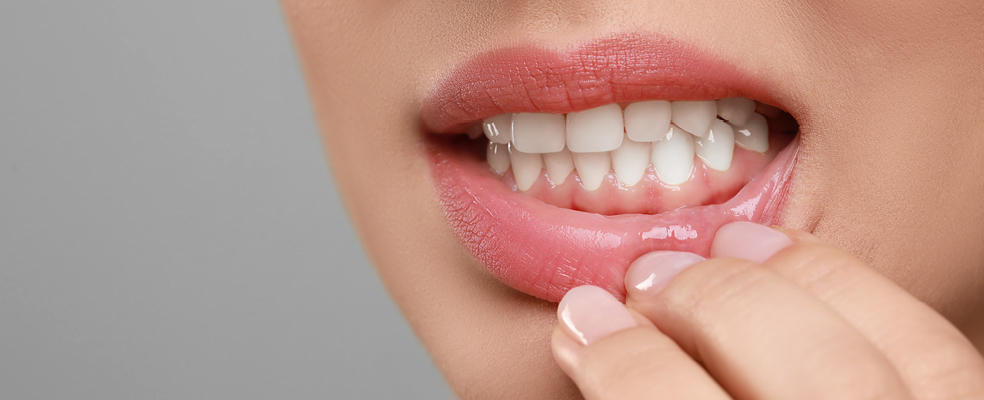
Receding gums often show up as small, easy-to-miss changes long before they cause pain — a tooth that looks a little longer, a gum that seems to be pulling away, or new sensitivity near the gum line. Knowing what to look for helps you catch recession early, when it's most manageable.
Here's a plain-language guide to the signs of gum recession — including a few specific things people often search for, like a gum pulling away from a single tooth or gums that look like they're breaking down.
What receding gums look and feel like
The most common early signs are a tooth that appears longer than its neighbors, a small notch or step where the gum meets the tooth, and sensitivity to hot, cold, or sweet foods. You might also feel a rough edge at the gum line with your tongue. Because these changes are gradual, they're easy to overlook until a dentist measures your gums and points them out.
'My gum is coming away from a tooth'
That pulling-away feeling — where the gum seems to be separating or lifting from the tooth — is a classic description of recession, and sometimes of the gum inflammation that precedes it. When gums are healthy, they hug each tooth snugly. When plaque and bacteria build up along the gum line, the tissue can become inflamed and start to detach, forming a small pocket. If you can see or feel a gum edge lifting away from a tooth, it's worth having it checked before the pocket deepens.
A receding gum on one tooth or molar
Recession doesn't always affect the whole mouth evenly — it's common to notice it on a single tooth or a specific molar first. Localized recession like this often points to a specific cause at that spot: heavy brushing pressure on one side, a tooth that sits slightly out of alignment, the edge of an old filling or crown, or grinding that loads one tooth more than others. Because the cause is usually local, the fix often is too, which is another reason to have a dentist look at exactly where it's happening.
When gums look like they're 'decaying'
People sometimes describe dark, puffy, or breaking-down-looking gums as 'decaying.' Teeth decay; gums don't rot in the same way, but they can become discolored, swollen, and unhealthy-looking when gum disease is active — and the exposed roots left behind by recession are themselves more prone to decay than enamel-covered tooth surfaces. So a gum line that looks dark or unhealthy alongside recession is usually a sign of active gum disease that needs attention, not something to wait out.
Gingivitis and gum recession
Gingivitis — the earliest, reversible stage of gum disease — is inflammation of the gums caused by plaque along the gum line. Left unaddressed, it can progress to periodontitis, where the tissue and bone supporting the teeth break down and the gums recede. Catching things at the gingivitis stage is ideal, because it can often be reversed with a professional cleaning and better daily care before any lasting recession occurs. Our guide to what causes receding gums covers how this progression works.
What happens if receding gums go untreated
Recession that isn't addressed tends to continue, because the underlying cause is still active. Over time, more of the root becomes exposed, sensitivity increases, the risk of root decay rises, and in advanced cases the tooth can lose enough support to become loose. The encouraging part is that this progression is not inevitable — identifying the cause and treating it is what stops the slide. Our guide on how to stop receding gums walks through the options.
Frequently asked questions
What does the start of receding gums look like?
Early recession usually shows up as a tooth that looks slightly longer than its neighbors, a small notch or step at the gum line, or new sensitivity to hot and cold. It's often subtle enough that a dentist spots it before you do.
Why is my gum receding on just one tooth?
Recession on a single tooth usually has a local cause at that spot — heavier brushing pressure, a tooth slightly out of alignment, the edge of an old filling or crown, or grinding that overloads that tooth. A dentist can pinpoint which it is and address it directly.
Can gums look like they are decaying?
Gums don't decay the way teeth do, but active gum disease can make them look dark, swollen, and unhealthy, and the exposed roots from recession are more prone to decay than enamel. A gum line that looks unhealthy alongside recession usually signals active gum disease that needs treatment.
Is a gum pulling away from a tooth serious?
It can be. A gum lifting or separating from a tooth is a sign of recession or the inflammation that leads to it, and it often means a pocket is forming where bacteria collect. Having it checked early, before the pocket deepens, gives you the best chance to stop it.
Not sure what you're seeing?
If you've noticed any of these signs, a quick exam is the fastest way to know what's going on and what, if anything, to do about it. New guests can start with a $39 new-guest exam and X-rays. Find your nearest Ideal Dental to book a visit.